
How to Choose a 4 mL Dual-Chamber Cartridge for a Reusable Pen
Select a 4 mL dual-chamber cartridge by reviewing chamber layout, dimensions, closures, reconstitution travel, tolerances, documents and pen compatibility.
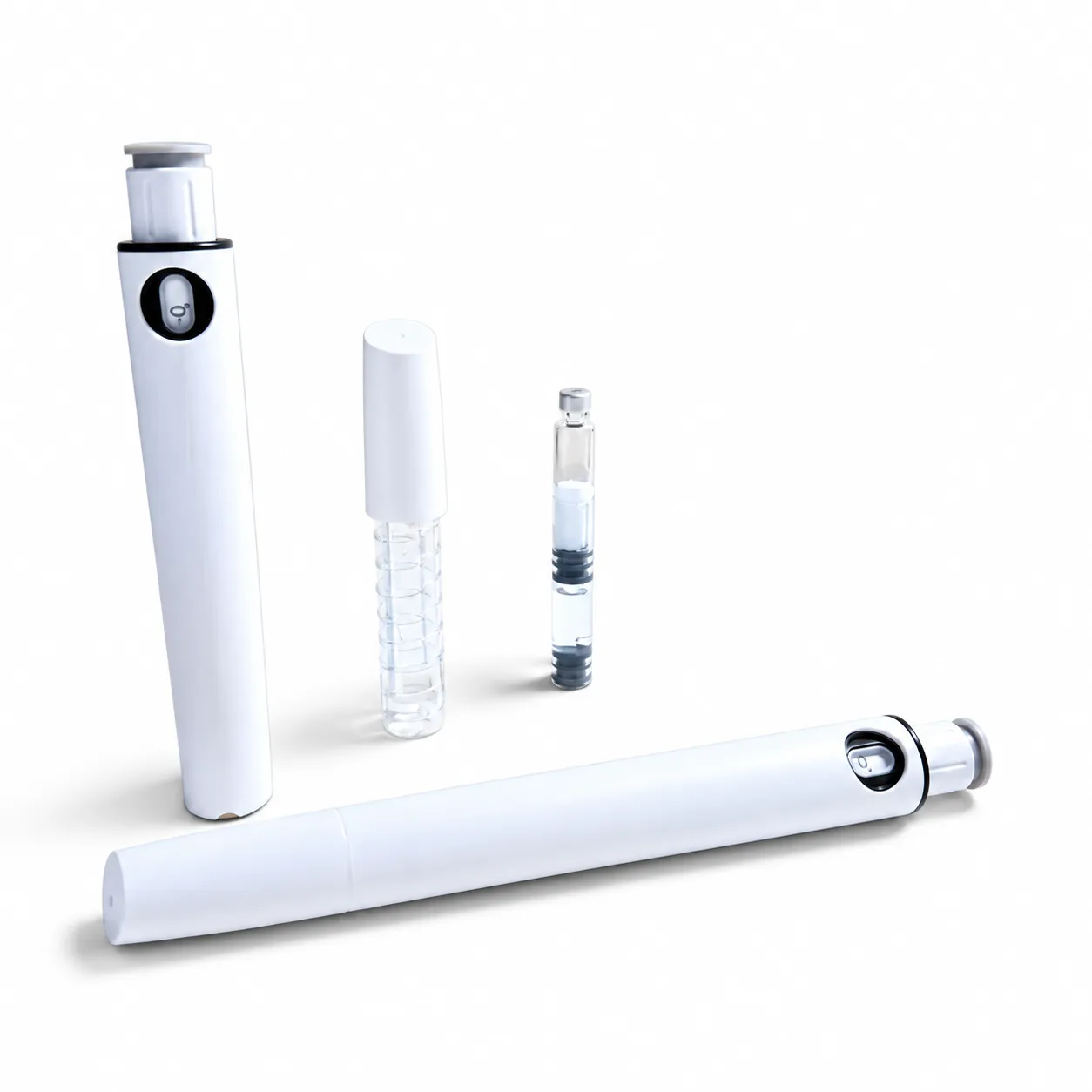
Start with the formulation and chamber arrangement
Define which chamber holds the dry or concentrated component, which holds the diluent, the required separation before use and the expected volume after reconstitution. These inputs affect stopper positions, available travel and the operating sequence. “4 mL” does not by itself describe the two chamber volumes or the delivered dose.
Critical cartridge information
| Decision area | What to obtain |
|---|---|
| Drawing | Overall length, barrel diameters, neck, flange, shoulder and critical tolerances. |
| Chambers | Nominal and usable volumes, stopper positions and bypass arrangement. |
| Closure system | Glass, plungers/stoppers, seal and material statements. |
| Travel | Reconstitution displacement, mixing space, final stopper position and delivery stroke. |
| Quality evidence | Applicable specifications, inspection data, change control and supplier documentation. |
| Samples | Representative units from the proposed production configuration. |
Match the cartridge to the reusable pen
Compare the cartridge drawing with the holder, drive rod, travel, viewing window and needle-end interface. Verify that assembly loads and operating forces remain suitable across tolerance extremes. A cartridge that fits physically can still fail the intended reconstitution or delivery sequence.
Documents to request from the cartridge supplier
- Current controlled drawing and material/closure description.
- Dimensional inspection specification and sampling approach.
- Applicable quality-system evidence and manufacturing-site scope.
- Change-notification and revision-control procedure.
- Packaging, transport and storage information.
- Samples and lot traceability for compatibility work.
Build a verification plan before locking supply
The project team should define assembly, reconstitution, dose delivery, leakage, breakage, transport, aging and user-interaction checks appropriate to the actual drug-device combination. Penacta can support device-side screening, but final container suitability, compatibility and regulatory conclusions remain project-specific.
Frequently asked questions
Does every 4 mL cartridge fit the same pen?
No. Nominal capacity does not define geometry, tolerances, closure or reconstitution travel.
Is 4 mL the delivered dose?
No. It is a container description; the delivered dose is configuration-specific.
What should be submitted first?
A controlled cartridge drawing plus chamber, closure and dose requirements.
Submit Your Cartridge Drawing
Send the controlled 4 mL dual-chamber cartridge drawing, chamber volumes, closure details and intended sequence for a first compatibility review.
Submit Your Cartridge Drawing →Your customer has lyophilized powder: what should you ask next?
“We have 10 mg per vial and want a reusable pen” is enough to start a conversation, but not enough to select a configuration. Establish where the product will be reconstituted, the final liquid volume and the intended delivery requirement before suggesting a specific pen.
Read the label without confusing total amount and dose
Total mg per container describes its contents. It is not the concentration and is not necessarily the amount per injection. Ask for the confirmed final solution volume to calculate concentration. For example, 10 mg in a final 2 mL gives 5 mg/mL. Keep IU or other drug-specific units with their matching concentration; do not convert IU to mg without the required drug-specific information.
Establish the mixing workflow
Ask whether mixing should take place in a separate container or inside a dual-chamber cartridge. In-cartridge reconstitution requires review of chamber allocation, stopper positions, bypass and the activation sequence. External mixing requires a defined downstream container and transfer or filling process. Neither route should be inferred from the powder's label alone.
Ask only for the next missing input
| Customer says | Useful follow-up |
|---|---|
| 10 mg per vial | What is the final solution volume, and where will reconstitution happen? |
| 5 mg/mL | What is the maximum single dose and actual cartridge fill? |
| Reusable dual-chamber pen | Do you already have a dual-chamber cartridge drawing and mixing sequence? |
| We need samples | Is the purpose appearance, mechanism demonstration or technical evaluation? |
| Please quote 1,000 units | Which configuration and supply components, logo and packaging are required? |
Why ask for maximum delivery volume?
Cartridge capacity and maximum single-injection volume answer different questions. Convert an already-defined drug dose to mL using its matching concentration. Confirm minimum dose and increment as the project develops. A pen capable of holding a nominal container size is not automatically suitable for every dose programme using that size.
Turn the conversation into a clear next step
Record what is confirmed, what still needs evidence and what can happen next. Depending on the information available, the next step may be platform comparison, cartridge-drawing review, demonstration-sample discussion or a configuration-specific quotation. Photos can help clarify the label and container, but do not replace the final technical drawing.
A short first reply for distributors
“Please share whether mixing occurs externally or inside the cartridge, the final concentration or total drug amount plus confirmed final volume, maximum dose per injection, and any existing cartridge drawing. Unknown items may be left open. A label or packaging photo can help us identify what to confirm next.”
Prepare a short project brief or compare the reusable dual-chamber platform. Penacta supports early screening and coordination; final compatibility must be established for the selected pen, cartridge, formulation and use conditions.