FSH Injection Pen Selection for Fertility Drug Programs
A technical buyer guide to selecting an injection pen platform for FSH fertility drug programs without assuming unverified drug-device compatibility.
Start with the FSH presentation, not the device appearance
Define whether the program uses a liquid or reconstituted presentation, the primary container, concentration, minimum and maximum prescribed dose, dose-adjustment steps, treatment duration and expected number of injections. These inputs determine which reusable, disposable or dual-chamber architecture deserves evaluation.
Selection questions for a fertility program
| Decision area | Questions for the project team |
|---|---|
| Formulation | Liquid or lyophilized? What are viscosity and stability constraints? |
| Container | Which cartridge drawing, closure and fill volume are proposed? |
| Dose | What increment and maximum dose are required, and how do units relate to delivered volume? |
| User | What training, dexterity, vision, confidence and error-recovery needs exist? |
| Workflow | Loading, priming, dose setting, injection, feedback, storage and disposal. |
| Market | Which evidence, labeling, language and regulatory pathway apply? |
Reusable, disposable or dual chamber?
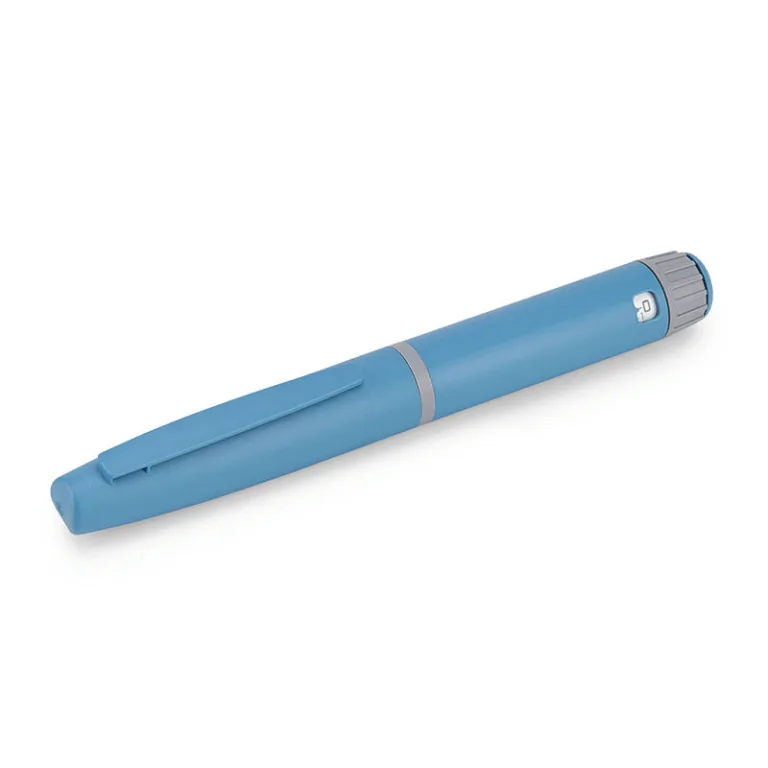
A reusable pen may suit programs using replaceable cartridges and repeated treatment cycles. A disposable platform may simplify cartridge installation for the user but changes the supply and waste model. A dual-chamber system may be considered when separate components must be reconstituted before delivery. These are screening routes; the project evidence must support the final choice.
Human-factors questions deserve early review
- Can users distinguish dose units and read the display reliably?
- Are priming and correction steps clear and recoverable?
- Does feedback make incomplete delivery or an invalid setting noticeable?
- Can users replace cartridges or needles without creating new errors?
- Are instructions appropriate for home use, training and language needs?
Evidence and compatibility boundaries
Application terms such as FSH or fertility identify a buyer’s development context; they do not establish approval or compatibility for a named medicine. Final conclusions require project-specific container, dose-delivery, stability, usability, labeling and regulatory evidence. Penacta can screen reference platforms and coordinate questions, but the finished combination remains the program owner’s validated product.
Frequently asked questions
Is an insulin-style pen automatically suitable for FSH?
No. Similar architecture or cartridge capacity does not establish drug-device compatibility.
Which device format is best for FSH?
The answer depends on the formulation, container, dose system, user workflow and market evidence requirements.
Can Penacta confirm a named medicine is compatible?
Penacta can support platform screening; final compatibility requires evidence for the actual drug-device combination.
Discuss an FSH Pen Program
Share the formulation presentation, cartridge drawing, dose schedule, intended users, market and annual volume for an initial platform-screening discussion.
Discuss an FSH Pen Program →