Reusable Dual-Chamber Pen Injector Manufacturer: 4 mL OEM & Wholesale
A buyer brief for sourcing reusable 4 mL dual-chamber pen injector platforms, OEM customization, evidence, MOQ and wholesale quotation inputs.
What “4 mL” means in a dual-chamber pen project
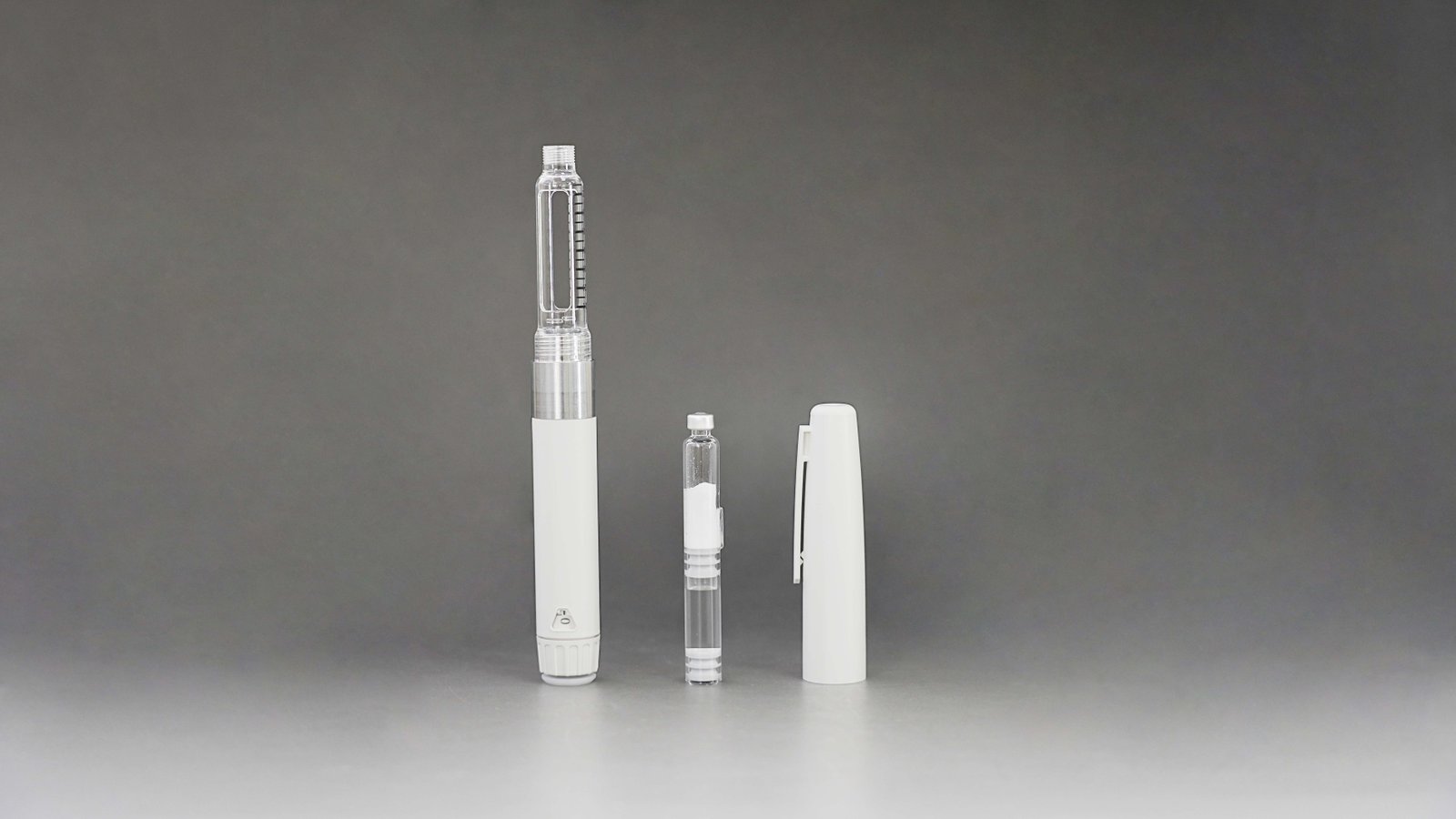
The 4 mL description refers to the nominal dual-chamber cartridge platform; it is not the injection dose. Reusable and disposable dual-chamber pens must be treated as separate models, and their dose range, priming, residual volume and operating sequence must not be mixed. Request the controlled specification for the exact reusable model being quoted.
What a manufacturer quotation should identify
| Quotation item | What the buyer should receive |
|---|---|
| Device configuration | Exact reference model, reusable format, dose increment and range. |
| Primary container | Dual-chamber cartridge drawing, nominal capacity, chamber arrangement and closure assumptions. |
| Reconstitution route | Sequence of operations, travel and stop positions, mixing expectations and user feedback. |
| OEM scope | Color, logo, scale, instructions and packaging separated from functional changes. |
| Evidence | Available drawings, quality documents and the project-specific verification still required. |
| Commercial basis | Quantity, configuration, sample stage, tooling if applicable, packaging and delivery destination. |
OEM and wholesale planning
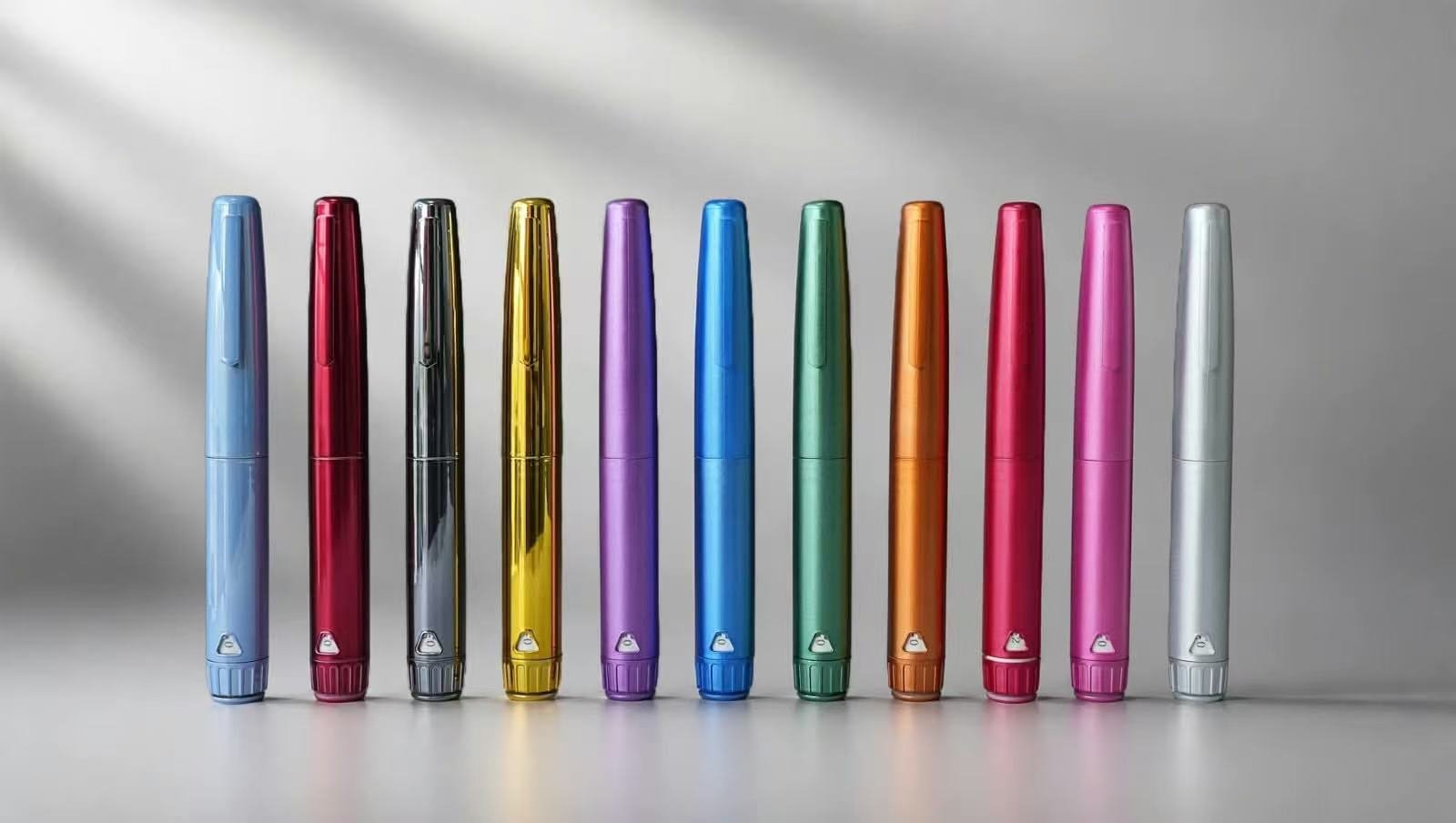
For standard in-stock pen models, the general MOQ starts at 500 units. A logo can be customized at this quantity, while the pen color is selected from the available stock colors for that model. Special new pen configurations generally start at 1,000 units. If a special configuration requires both a custom color and a custom logo, the general starting MOQ is 5,000 units. The exact MOQ and available colors must be confirmed for the specific pen model. Production lead time is stated as approximately two weeks after the configuration and artwork are approved; sample timing, price and tooling are confirmed in the quotation.
Evidence to request before a purchase order
- Configuration-controlled product drawing and bill-of-material scope.
- Dual-chamber cartridge interface and closure details.
- Needle interface statement and proposed compatible needle specification.
- Manufacturing quality-system evidence applicable to the quoted supply.
- Verification plan for dose delivery, reconstitution, transport, aging and user interaction.
- Approved sample, packaging artwork and change-control route.
How to compare suppliers
Normalize every quote to the same cartridge, dose system, customization, document package, quantity and delivery basis. A lower unit price is not comparable if it excludes the cartridge holder, needle, packaging, artwork review or required verification. Keep technical gaps open until evidence closes them rather than treating a brochure statement as project validation.
Frequently asked questions
Is 4 mL the injection dose?
No. It describes the nominal dual-chamber cartridge platform. The delivered dose range is configuration-specific.
Can the pen be ordered with a custom logo and color?
Appearance and packaging customization can be evaluated after the functional configuration is defined.
Does the platform confirm compatibility with a specific drug?
No. Drug-device compatibility and regulatory conclusions require project-specific evidence.
Request a 4 mL Dual-Chamber Quotation
Share the cartridge drawing, dose profile, target market, annual volume and OEM scope. Penacta will map the request to a reference platform and identify open verification items.
Request a 4 mL Dual-Chamber Quotation →From drug specifications to a dual-chamber pen quotation
A useful purchasing discussion starts with how the components are stored and mixed, the required delivery volume and the proposed cartridge. Samples, branding and commercial terms can then be tied to a defined configuration.
Does your project need a dual-chamber system?
A dual-chamber cartridge separates components before use, such as a lyophilized drug and its diluent. The selected mechanism and operating sequence must support the intended transfer, mixing and delivery process. Powder alone does not establish the need for a dual-chamber pen. If reconstitution happens outside the device, the subsequent container and liquid-delivery route need a separate review. An existing vial cannot be assumed to fit a cartridge-based pen.
Three inputs for initial screening
- Final liquid concentration, with its unit, such as mg/mL or IU/mL.
- Maximum intended amount per injection, expressed in the same drug unit or directly in mL.
- Actual fill volume per cartridge, with the total drug amount where known.
Concentration equals drug amount divided by confirmed final solution volume. Injection volume equals the project-defined dose divided by a concentration expressed in matching units. For example, 10 mg in a final 2 mL gives 5 mg/mL. This is a unit-conversion illustration, not a treatment recommendation. For powder formulations, solvent added must not automatically be treated as final solution volume.
Nominal capacity is not usable delivery volume
Distinguish nominal cartridge capacity, fill in each chamber, final volume after reconstitution and usable delivered volume. Chamber allocation, stopper positions, bypass geometry, mixing space, priming and residual volume can affect the proposed presentation. A 4 mL designation alone does not confirm a 4 mL fill or a 4 mL injection.
Reusable or disposable?
A reusable direction retains the pen body and uses a project-matched replacement cartridge. Review loading, replacement supply, instructions and the repeated-use lifecycle. For a disposable direction, confirm the exact permitted sequence and disposal point. The word disposable alone does not establish a single dose. Compare complete supply and support assumptions rather than pen-body price alone.
Define the quote and sample scope
Ask whether the offer includes the pen body, empty cartridge, needle, accessories, packaging, customization and agreed technical work. Drug filling, lyophilization, sterile processing and finished-product release are not assumed to be included. For samples, distinguish appearance review, mechanism demonstration and formulation-specific evaluation. A demonstration sample does not confirm drug stability, mixing performance or dose accuracy for your formulation.
Confirm branding and quantity after the platform direction
Specify logo, colour, scale artwork and packaging separately. Scale information needs technical review because it communicates dosing. Confirm whether MOQ applies per model, colour, artwork or packaging version. Standard-sample quantities do not automatically establish custom-production MOQ.
Send what you already know through the short project brief, review customization options, or chat with Penacta. Unknown parameters can remain open for review; final suitability depends on the actual configuration and project evidence.