Human-factors lessons from semaglutide single-dose pens
Usability evidence is generated for a defined device, packaging, instructions and user population—not for a molecule name in isolation.
Evidence approachHuman-factors statements follow PubMed-indexed studies of semaglutide single-dose pens and comparable devices, including the user groups each study covered.
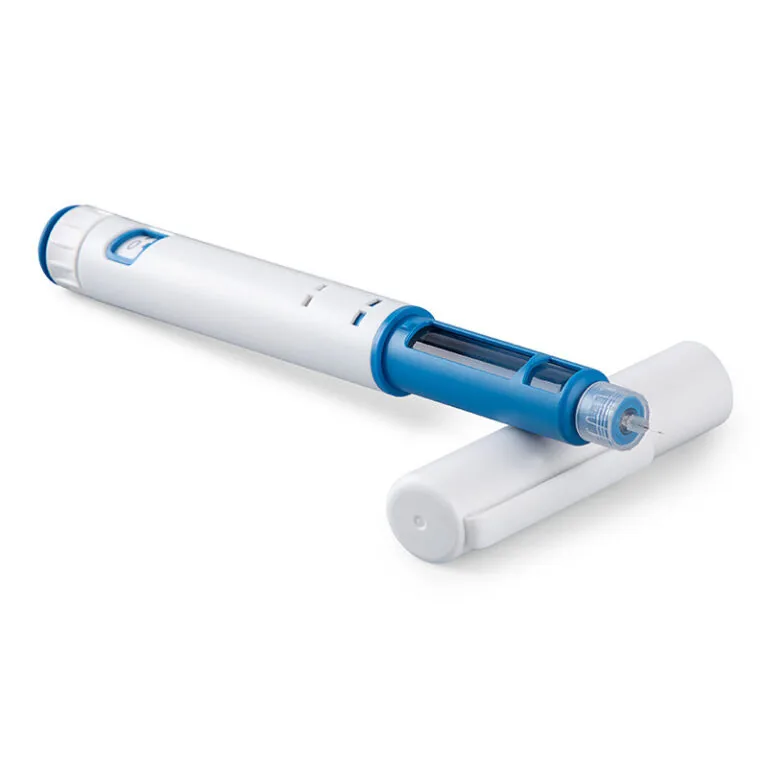
Representative device view for human factors discussion only. Final suitability requires configuration specific evidence.
What the research found
A summative study enrolled 60 adults across patients, healthcare professionals and pharmacists. Participants completed carton retrieval and simulated-use tasks for three single-dose variants. The report found no potentially serious use errors and high subjective ease-of-use ratings.
Engineering interpretationThe evaluated system included the pen, carton and instructions for use. Variant differentiation, first-use behavior and untrained use were therefore part of the evidence—not afterthoughts.
Connection to Penacta
For a semaglutide-related inquiry, Penacta can screen platform architecture, dose configuration, appearance and packaging. That does not establish suitability or approval. Formative and summative human-factors work must reflect the final combination product and intended users.
What human-factors questions apply to semaglutide pen programs
Start with the intended users, dose presentation, frequency, preparation steps, feedback, foreseeable errors and training. The molecule name alone does not define the correct device workflow.
Decision table
Review area
Buyer action
User groups
Name the user groups, including those with reduced dexterity or vision.
Dose presentation
Check the dose scale cannot be misread as a different strength.
Use steps
Walk the full sequence from cartridge check to needle removal.
Foreseeable errors
List the errors that would cause a wrong dose, and how the device prevents them.